

Concept and creation of Yona Sollaku.
Objective
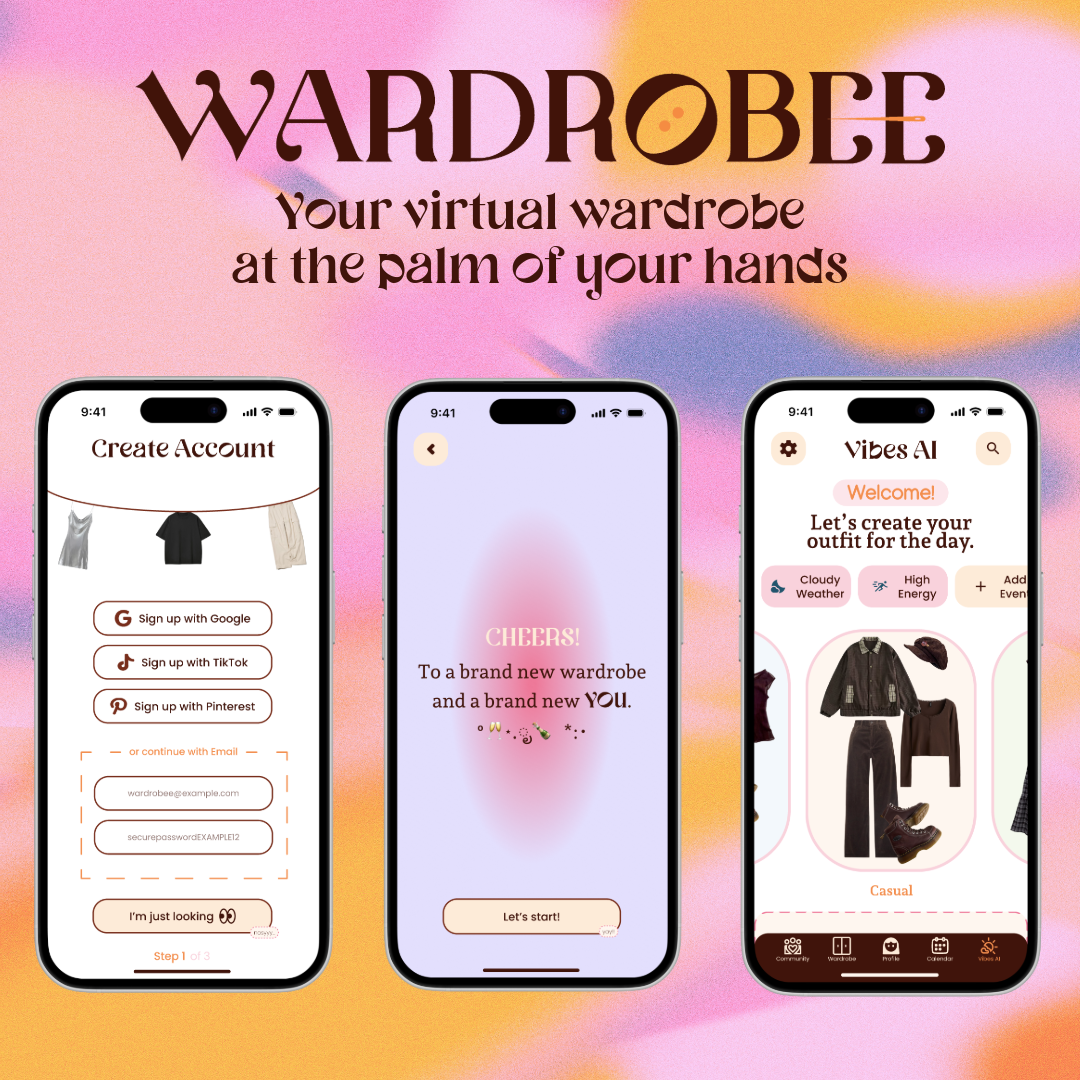
The goal was to transform the digital closet from a practical utility into a playful and lifestyle-enhancing experience. Wardrobee aims to help users organize their clothing easily, track outfit history through a visual calendar, explore a supportive fashion community, discover new items, and receive AI-powered recommendations based on mood, weather, and events.
Software
Figma, Adobe Illustrator, Adobe Express
My Role
Research and design
Project Overview
Wardrobee is a digital wardrobe app that reimagines how people document outfits, plan looks, and engage with fashion communities. While many closet apps focus purely on categorizing clothes, Wardrobee blends organization with community, creativity, and emotional connection. Its soft visual identity, clear information architecture, and intuitive navigation support a personalized and inviting user experience. This project includes brand identity development, user and competitor research, and mobile app design.
The Problem
Most digital closet apps focus on utility, offering features like outfit creation, wardrobe organization, and shopping links. While helpful, they often feel:
✘ Visually sterile or overly minimal
✘ Transactional instead of personal
✘ Lacking community features
✘ Intimidating for users who do not consider themselves fashion experts
Users need a space that encourages experimentation, helps them understand their wardrobe habits, and connects them with others who share similar styles
without feeling overwhelming or impersonal.
The Process
Step 1. Competitor Research & Analysis
I reviewed user feedback from leading competitors to identify common pain points, including slow onboarding, unclear categorization, lack of personalization, and uninspired visual design.
Indyx
User Reviews
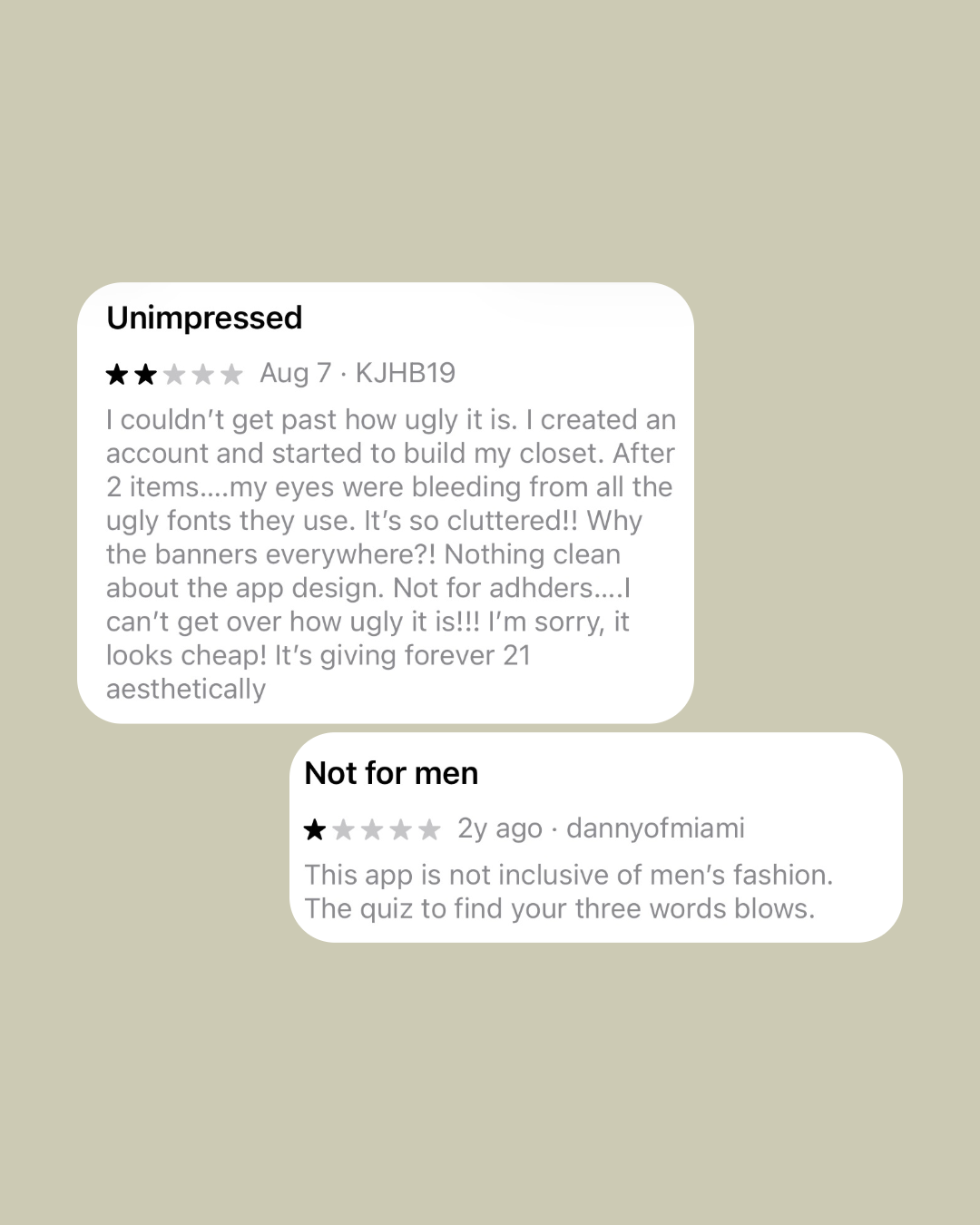
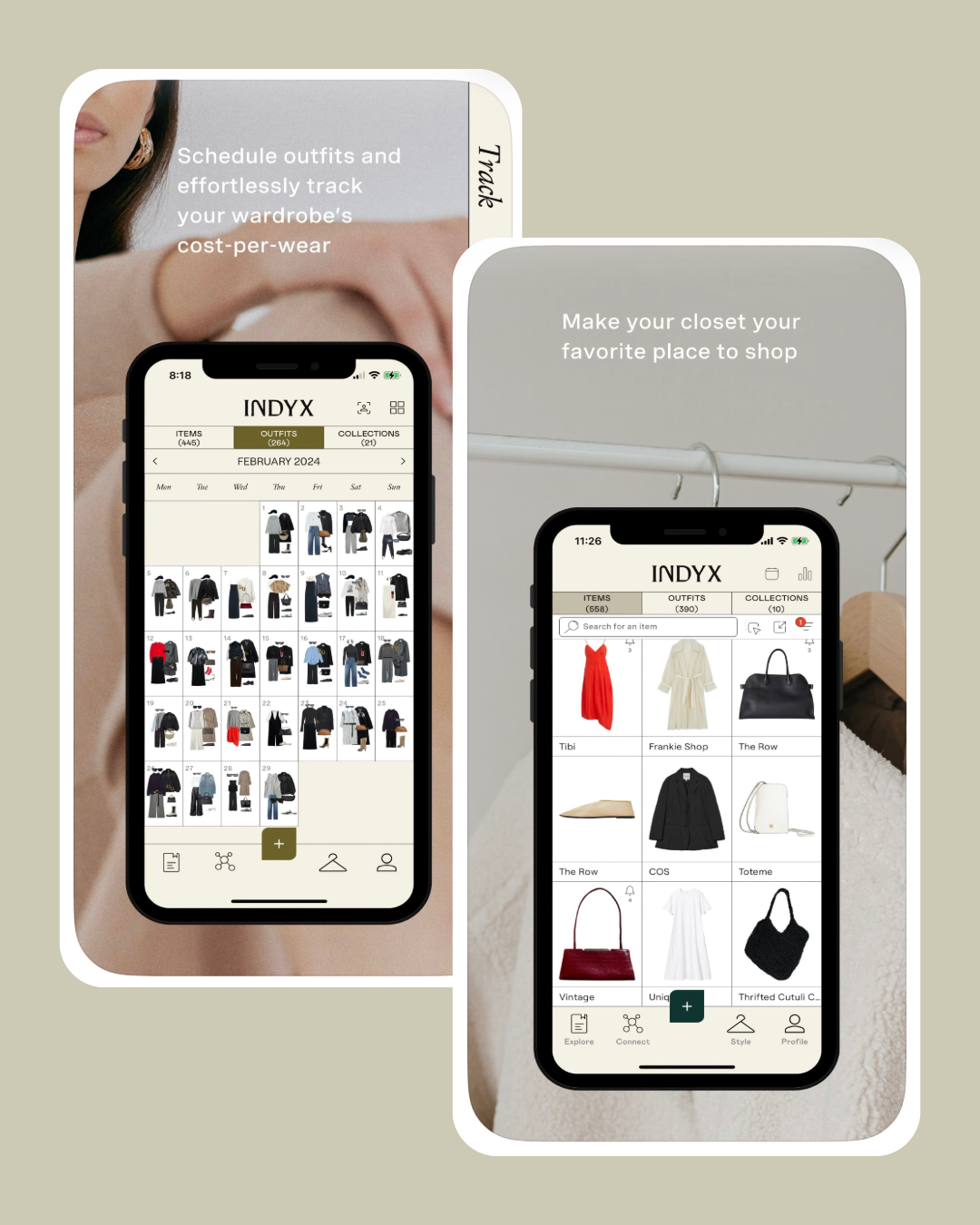
Indyx provides strong analytics but suffers from dense visuals and an outdated interface. Users report cluttered layouts, inconsistent navigation, weak typography choices, and small tap targets that reduce accessibility. Although designed with gender neutrality in mind, not all users feel fully represented or welcomed.
Whering
User Reviews
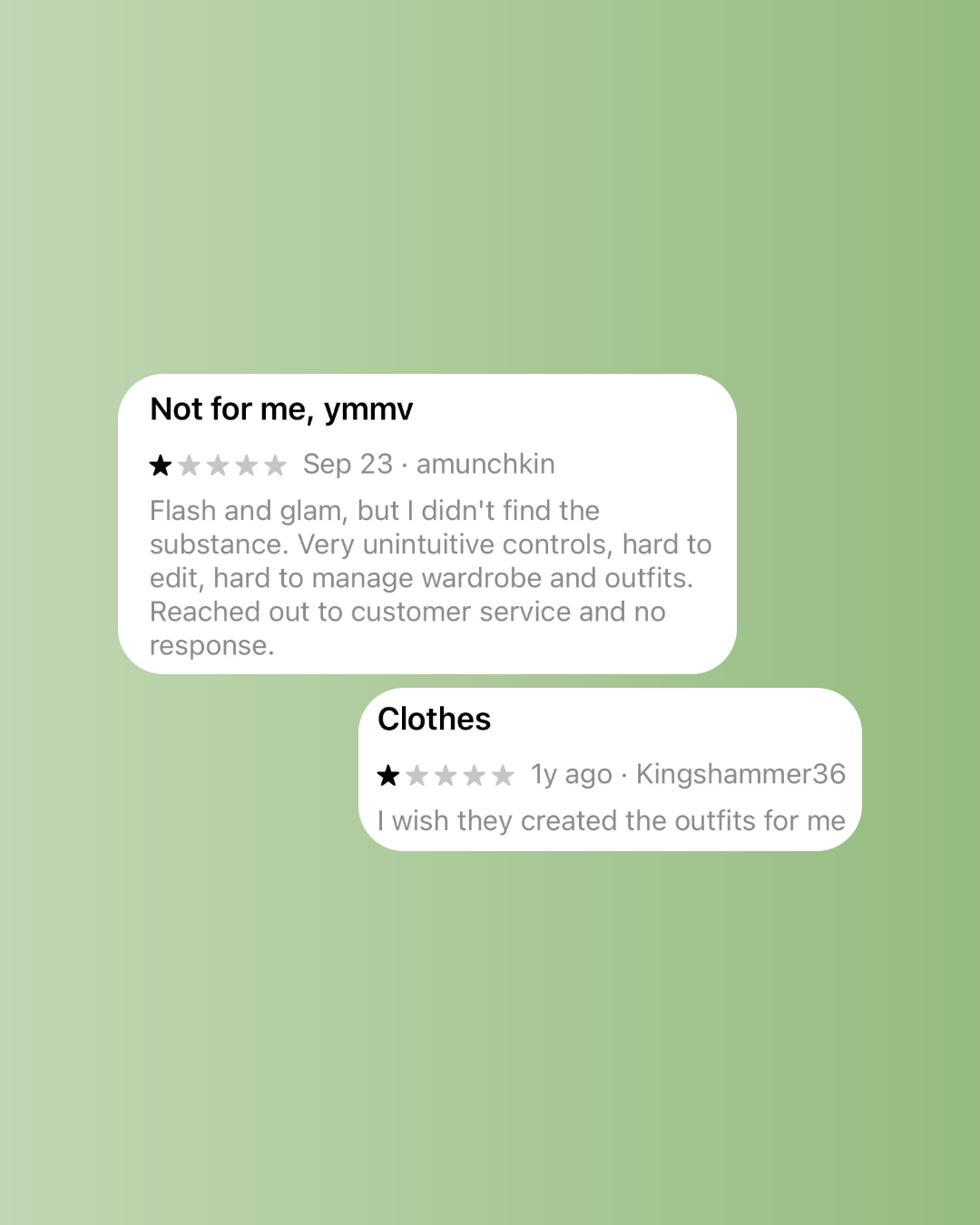
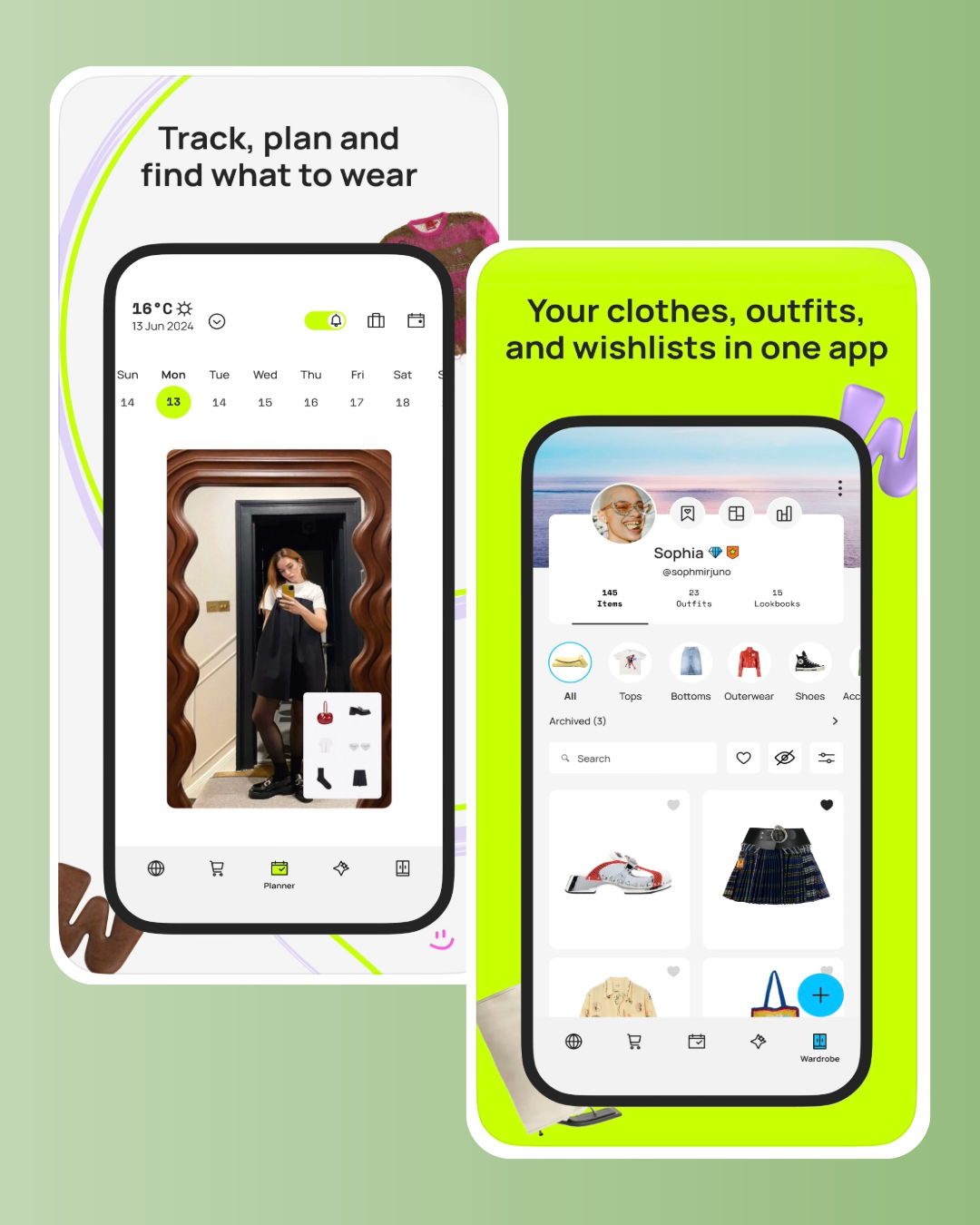
Whering excels in branding and aesthetic appeal but offers limited social interaction and places heavy emphasis on shopping and upsells. Users describe the interface as stylish yet unintuitive, noting that navigation icons lack labels and that they wish outfit creation felt more guided.
Step 2. Logo Design
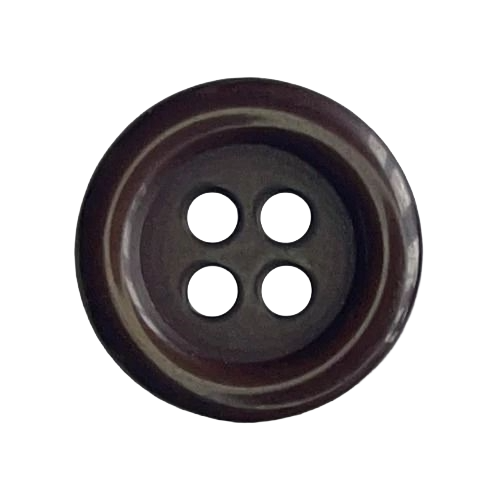
I began by creating the brand name and visual identity. “Wardrobee” adds a playful twist to the word wardrobe, similar to giving a friendly nickname. The logo is inspired by sewing and sustainability, where the letter O resembles a button and the E incorporates a threaded needle. The burnt apricot color contrasts with a vibrant orange accent to create emotional warmth and visual focus.
Inspiration


Final Logo
Step 3. App Design Development
⟡ I refined usability across navigation, card scaling, and gesture-based interactions to ensure a smooth and intuitive experience. Iterations focused on improving clarity and reducing cognitive load during outfit browsing and mood-based recommendations.
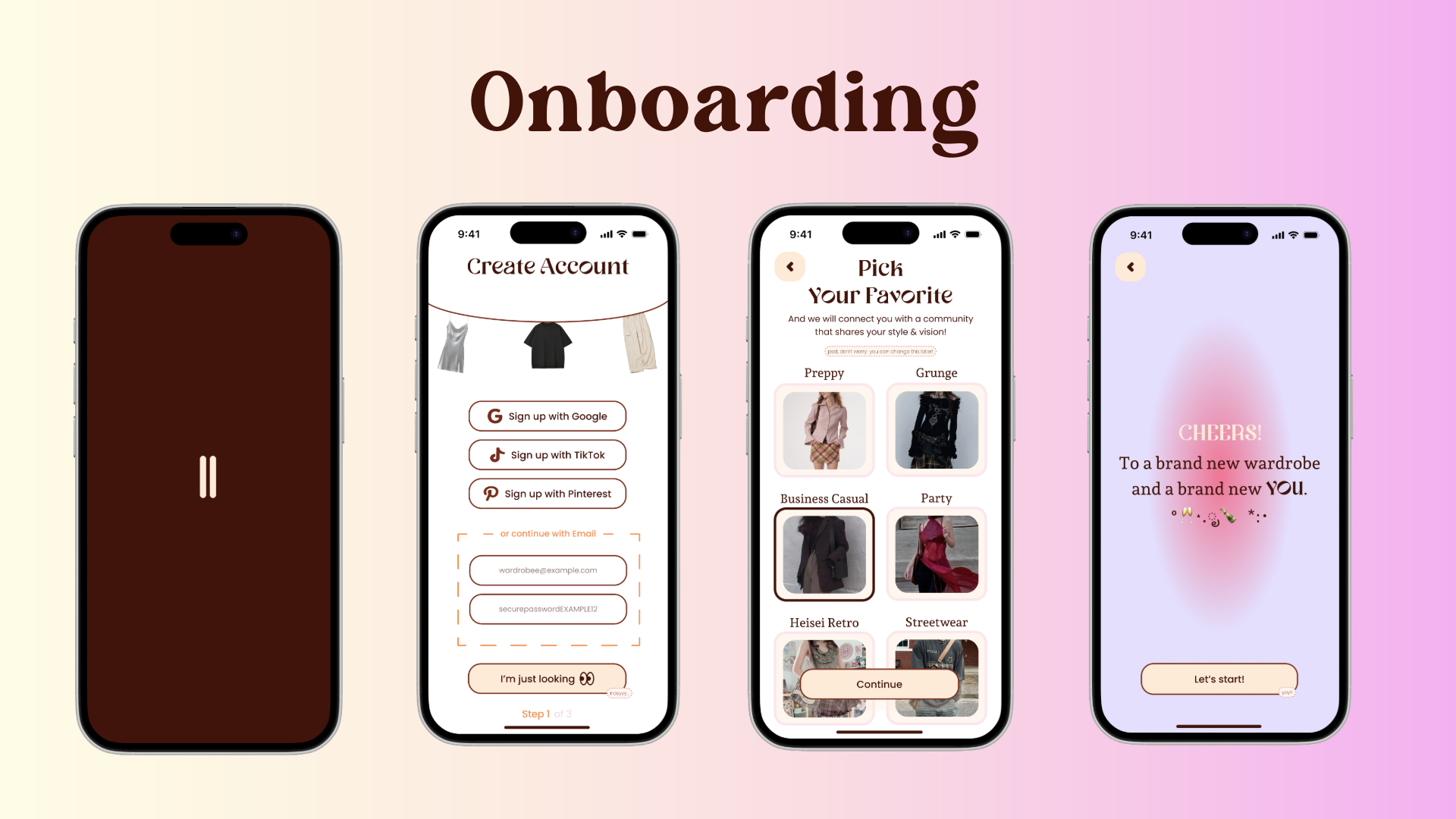
⟡ The onboarding flow introduces users to Wardrobee through a simple and welcoming setup. After a brief introduction, users create an account using a quick sign-up process that minimizes friction. They add a profile picture to establish their identity, then select their favorite fashion styles through a playful and intuitive interface. These choices personalize the experience from the start and set the foundation for tailored recommendations.
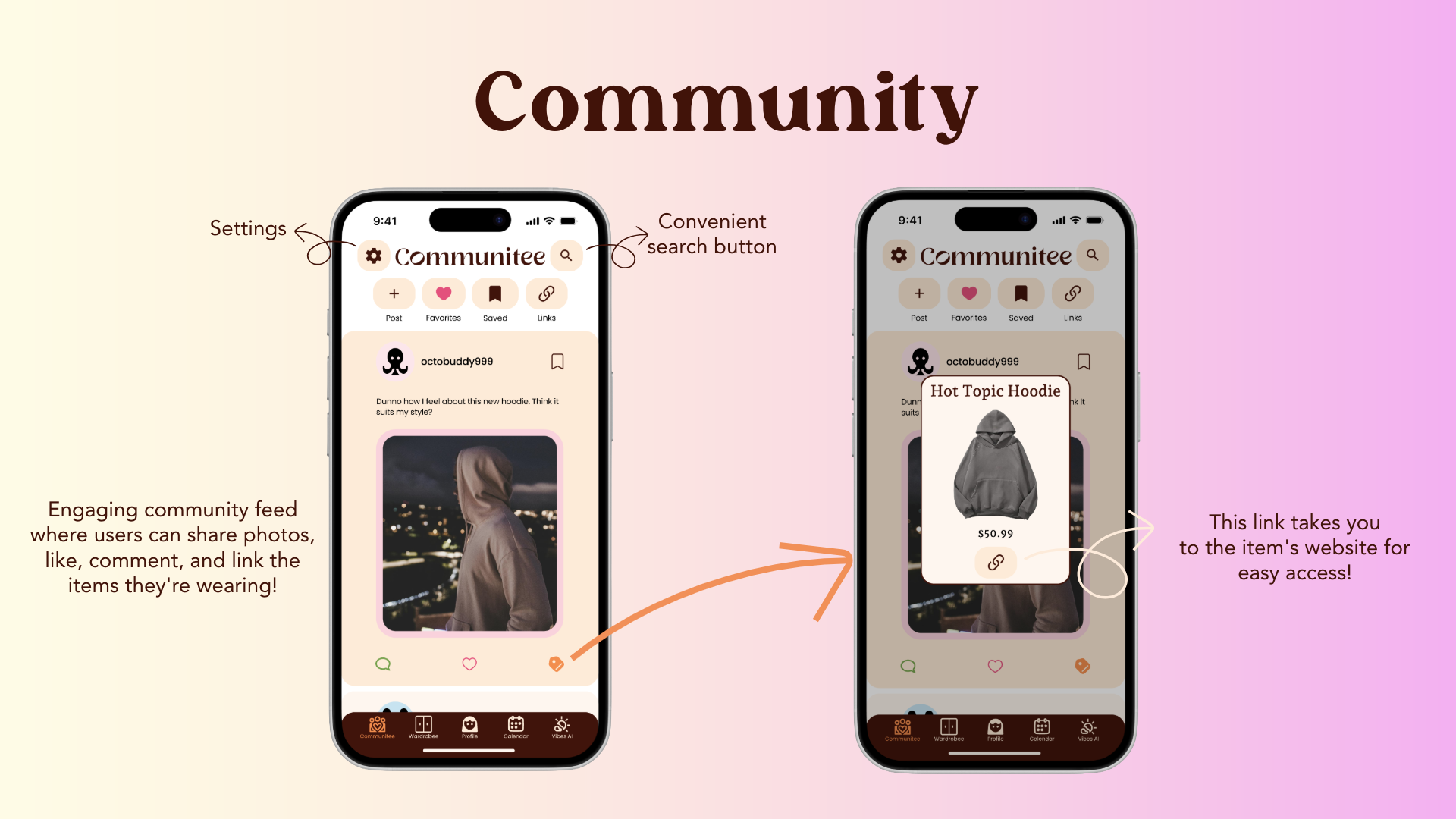
⟡ After onboarding, users are guided into the community features. They first explore the Community Feed, where they can browse outfits, save inspiration, and engage with others who share similar styles. This helps users feel connected before they begin organizing their own wardrobe. They then move to their Profile, which acts as their personal hub for saved outfits, wardrobe stats, and identity within the app.
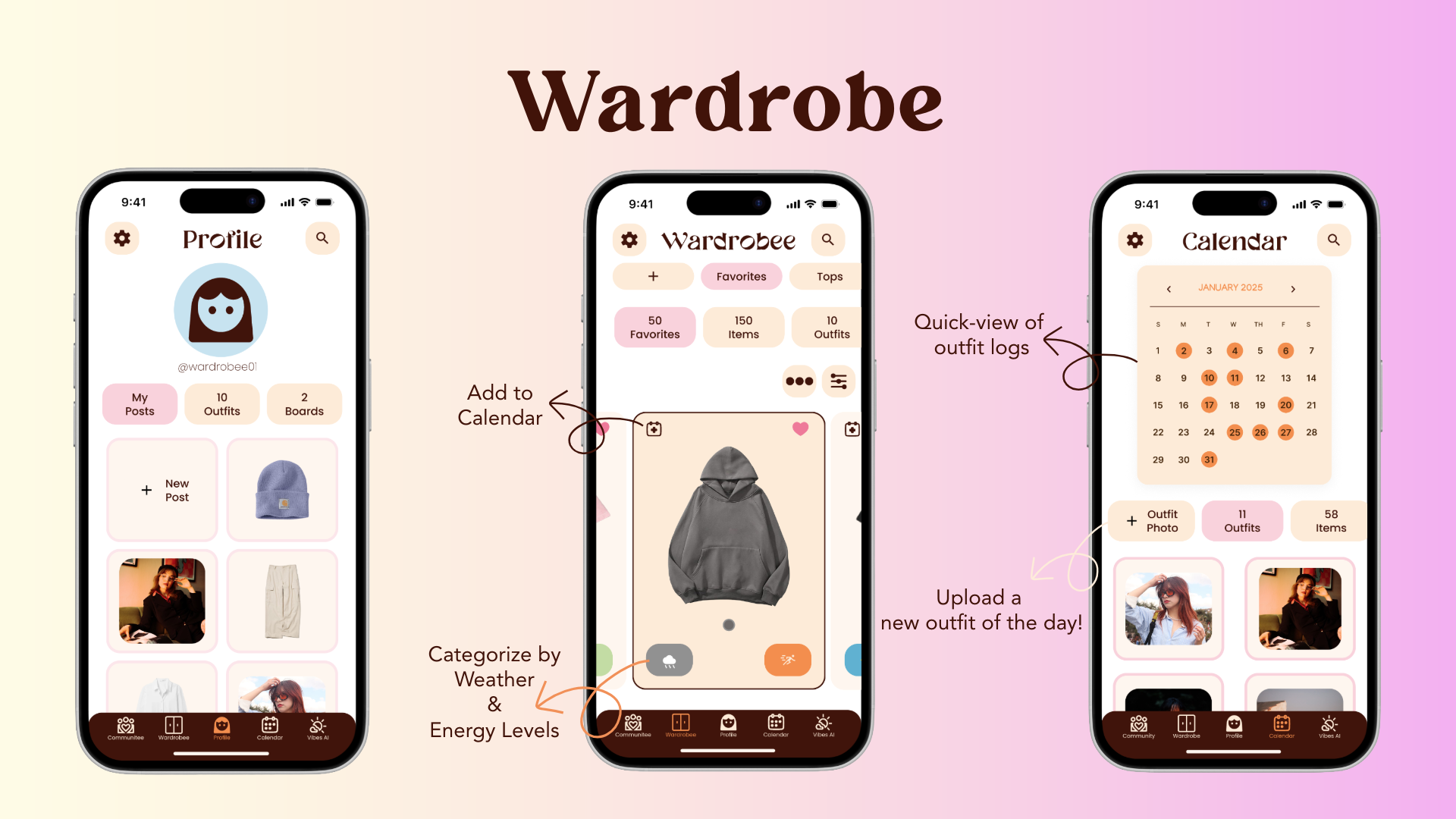
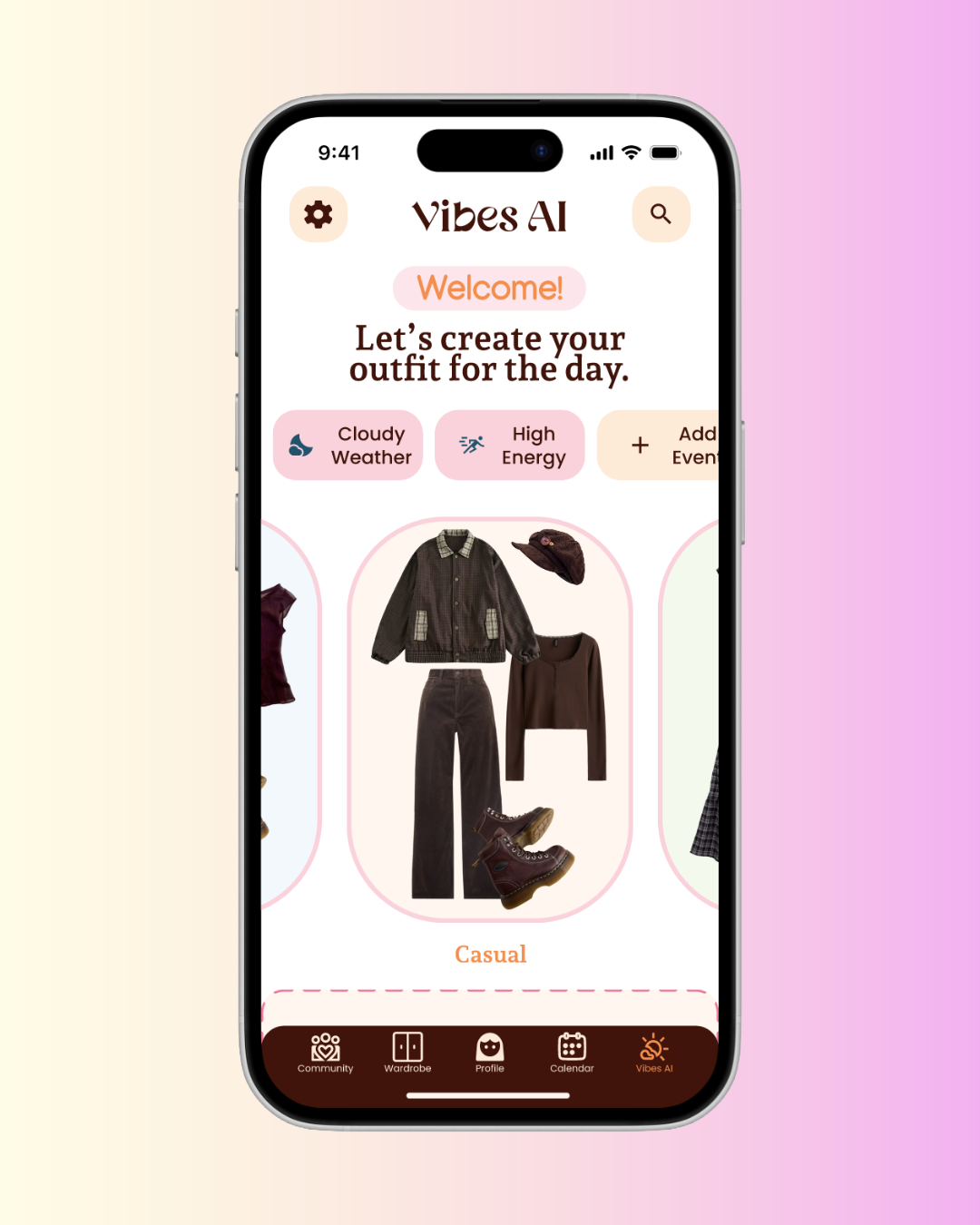
⟡ Next, users are introduced to the Calendar, where they can visually track their daily outfits and observe patterns in their style over time. The flow concludes with Vibes AI, which offers personalized outfit suggestions based on mood, weather, or events. This final step highlights Wardrobee’s blend of creativity and practicality, showing users how the app supports everyday styling decisions.
What I learned 💭
What I learned 💭
I gained experience building an app from brand identity to high-fidelity screens while keeping user emotion at the center of the design. Research helped clarify what users value in fashion apps and how to avoid overwhelming them with features. Balancing playfulness with usability strengthened my understanding of tone, visual hierarchy, and community-driven interactions.
⚉But it does not end here…⚉
Wardrobee is a user-first, continually evolving experience with plenty of room to grow. My goal is to bring this app into the world with thoughtful, meaningful enhancements that expand both functionality and delight. Future opportunities include theme customization for greater personalization, optional in-app shopping for convenience, access to professional stylists, and new ways to keep users engaged through interactive in-app games.
Most importantly, Wardrobee is designed with iteration in mind. Every idea, feature, and visual decision reflects a commitment to listening, learning, and improving based on real user needs. As this concept evolves, I hope to partner with a team that values creativity, ethical design, and the opportunity to build something genuinely helpful for people. Wardrobee represents not just a project, but the type of user-centered, thoughtfully crafted work I strive to bring into the world.